March 2026
The final talk of the DDHS 2025-2026 season was given by Ray Perman FRSE who is a biographer of the famous geologist James Hutton. Ray Perman is an accomplished speaker and delivered and informative and intriguing talk on the life of James Hutton. Photos and text below by Ray Perman and additional links by Dr James Herring.
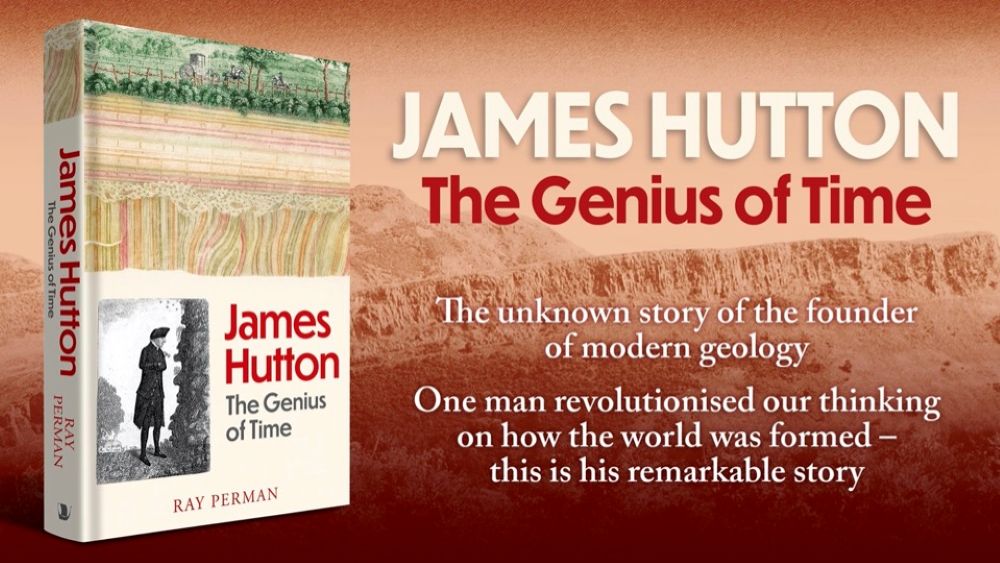
The photo above shows the first slide from the talk. Ray Perman’s book on Hutton can be bought here. James Hutton was many things in his life: an apprentice lawyer, a qualified doctor, an improving farmer, an entrepreneurial chemical engineer and a civil engineer, working on the ambitious Forth & Clyde canal. All these things made him interesting – but what made him remarkable was his revolutionary Theory of the Earth (online book) explaining the forces and processes which have shaped our world over countless ages – and continue to do so.
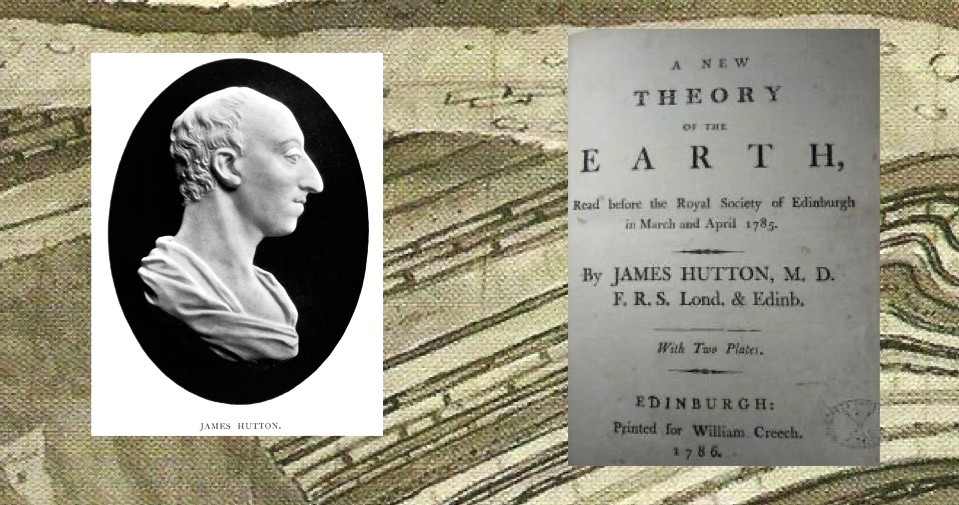
The slide above shows the bust of James Hutton as well as his book. You can read more about the bust here. Hutton’s theory contradicted the Biblical orthodoxy, which estimated at the age of the earth at no more than 6,000 years and claimed the Six Days of Creation and Noah’s Flood could explain how the earth was formed. Hutton was accused of atheism and being a mere theorist. He spent years gathering and publishing evidence from geological features such as Siccar Point (good photos), where rock strata formed horizontally on the bed of the seas had been pushed up to be almost vertical. Then they had been weathered away and on top of them, more strata had been laid down. This could not have happened in a few thousand years, said Hutton. It would have needed an unimaginable amount of time.
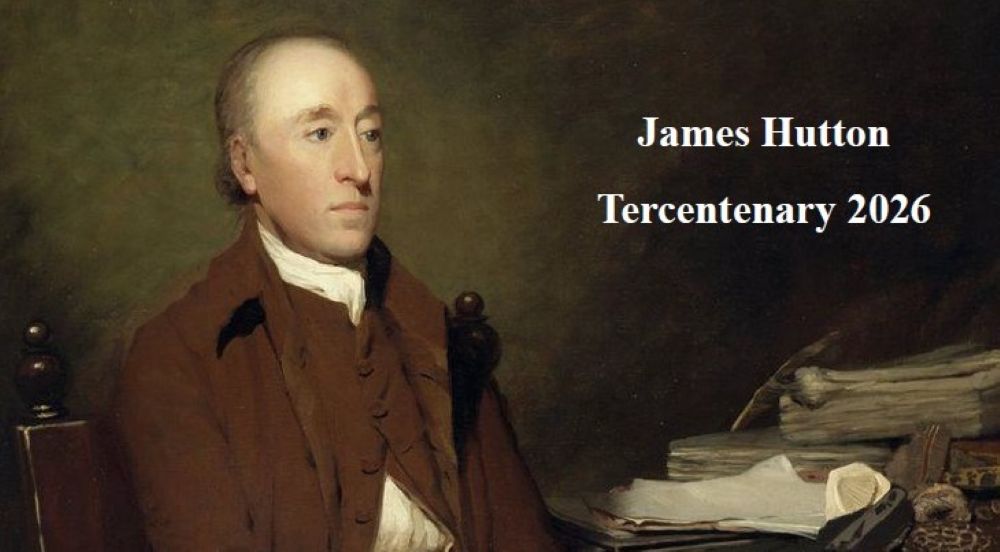
The slide from the talk above shows James Hutton as painted by Sir Henry Raeburn and you can see this portrait in the Scottish National Portrait Gallery. Ray Perman commented that Hutton was much less flamboyant in his dress than other prominent people painted by Raeburn. The unbuttoned waistcoat shows that Hutton wanted to be presented in a lesss formal manner.
When Hutton died his few disciples fought to support his theory against a sceptical establishment, but it was the following century before enlightened thinkers like Charles Lyell (biography) acknowledged the truth of Hutton’s arguments. Although modern science and technology have enabled us to understand the processes which formed the earth much better than Hutton could, his basic theory is still acknowledged as providing the base on which all subsequent learning has been built. The tercentenary of his birth gives us an opportunity to put James Hutton among the titans of the Scottish Enlightenment.
You must be logged in to post a comment.