November 2026
The latest talk in the DDHS 2026-2027 Season was presented by Tom Brownlee, who gave a very interesting talk, looking at definitions of pilgrimage, sites in East Lothian and overseas where pilgrims gathered, and how people of different religions or of a humanist persuasion met on pilgrimage. Text by Tom Brownlee with added links by Dr James Herring. All links open in a new tab.
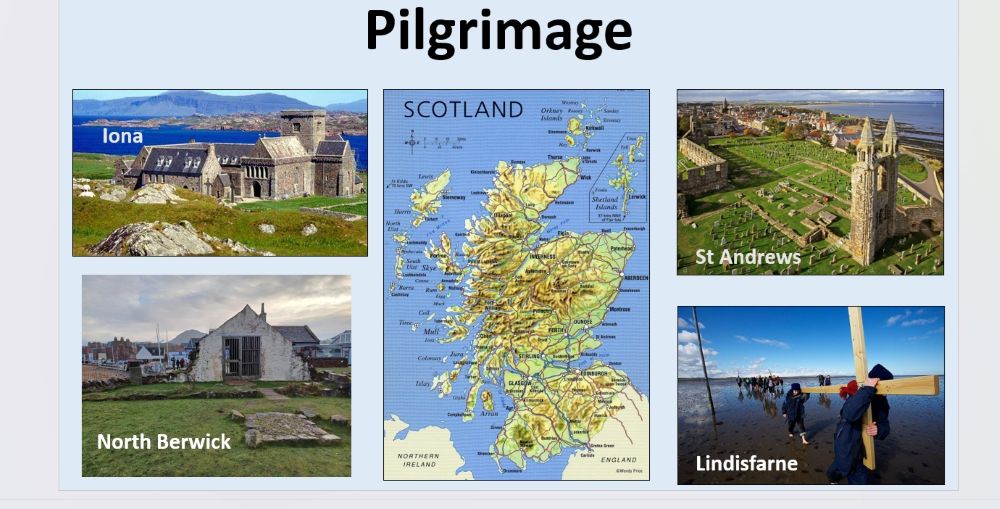
In his introduction, using the slide above, Tom Brownlee told the audience “You don’t have to travel to Spain to undertake a pilgrimage as East Lothian has its own network of sacred sites and pilgrim trails. So, what is a pilgrimage? Simply put, it can be defined as a devotional journey normally undertaken on foot to a special or sacred place. For many people it offers an opportunity to step outside of their busy lives, to connect with nature and reflect on the meaning of life. The British Pilgrimage Trust puts it like this: ‘Walking is for the body, pilgrimage for the soul'”.
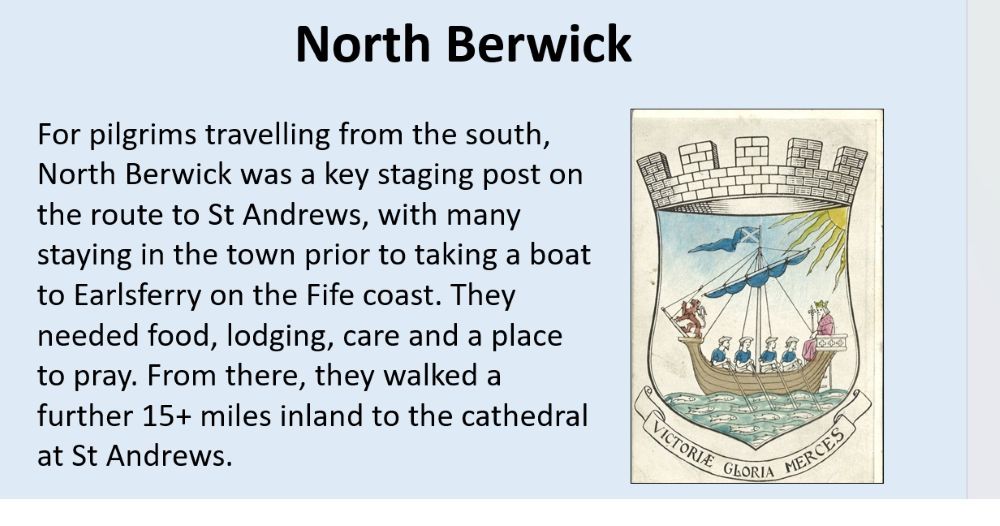
The speaker highlighted the importance of North Berwick in ferrying pilrims on their way to St Andrews – see slide above. He added “For several hundred years North Berwick was an important staging point for pilgrims en route to the shrine of St Andrew in Fife. The town’s early development owes much to the pilgrimage trade”. You can read more about the Pilgrim Ferry from North Berwick on this John Gray Centre site. The nearby Bass Rock was where St Baldred established a hermitage and the ruins of the chapel can be seen on boat trips to the rock.
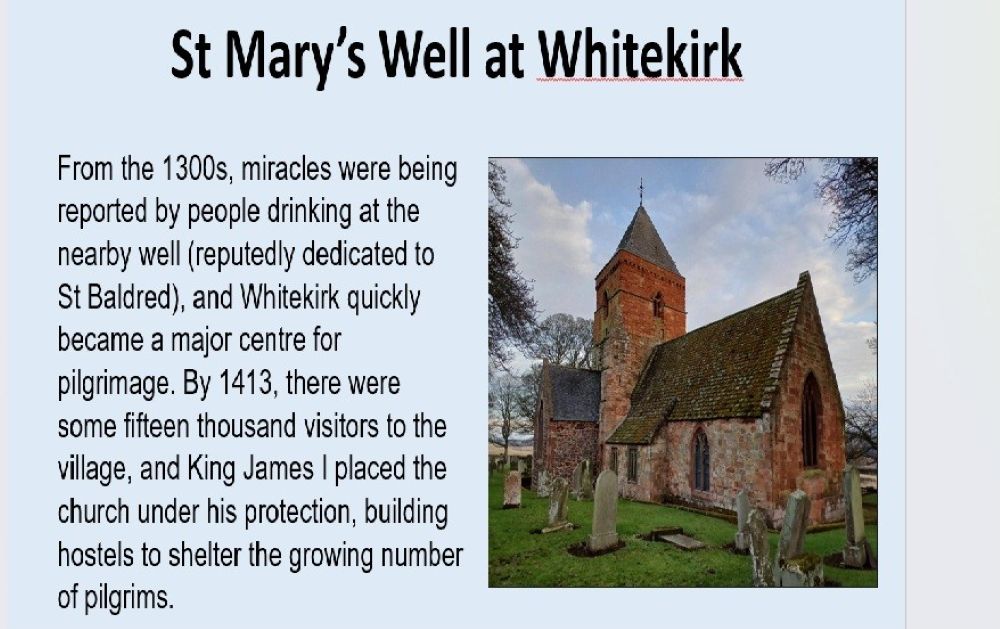
Another site highighted in the talk was at Whitekirk – see slide above. Tom Brownlee noted that ” In 1413 some 15,653 pilgrims travelled to the well, which was said to contain healing waters. For a population ravaged by plague and diseases like dysentery, the desire for divine intervention is perhaps understandable. While the well has disappeared without trace, since 1971 pilgrims have undertaken an annual 12 mile pilgrimage from Whitekirk to Haddington where they participate in an ecumenical service at St Mary’s Church.
The talk also looked at Lindisfarne and Iona as pilgrimage sites. It ended with a personal account of the speaker’s own pilgrimage to the Camino de Santiago de Compostella. The talk was enthusiastically received by an audience of nearly 50 people.
You must be logged in to post a comment.