August 2026
This month, we are returning to a book, first featured here in 2020, entitled Dunbar 200: The History of Dunbar Lifeboat Station 1808-2008. The book was written by the then lifeboat President Ivor McPhillips. Dr James Herring has selected three lifeboats with some interesting events related to them.
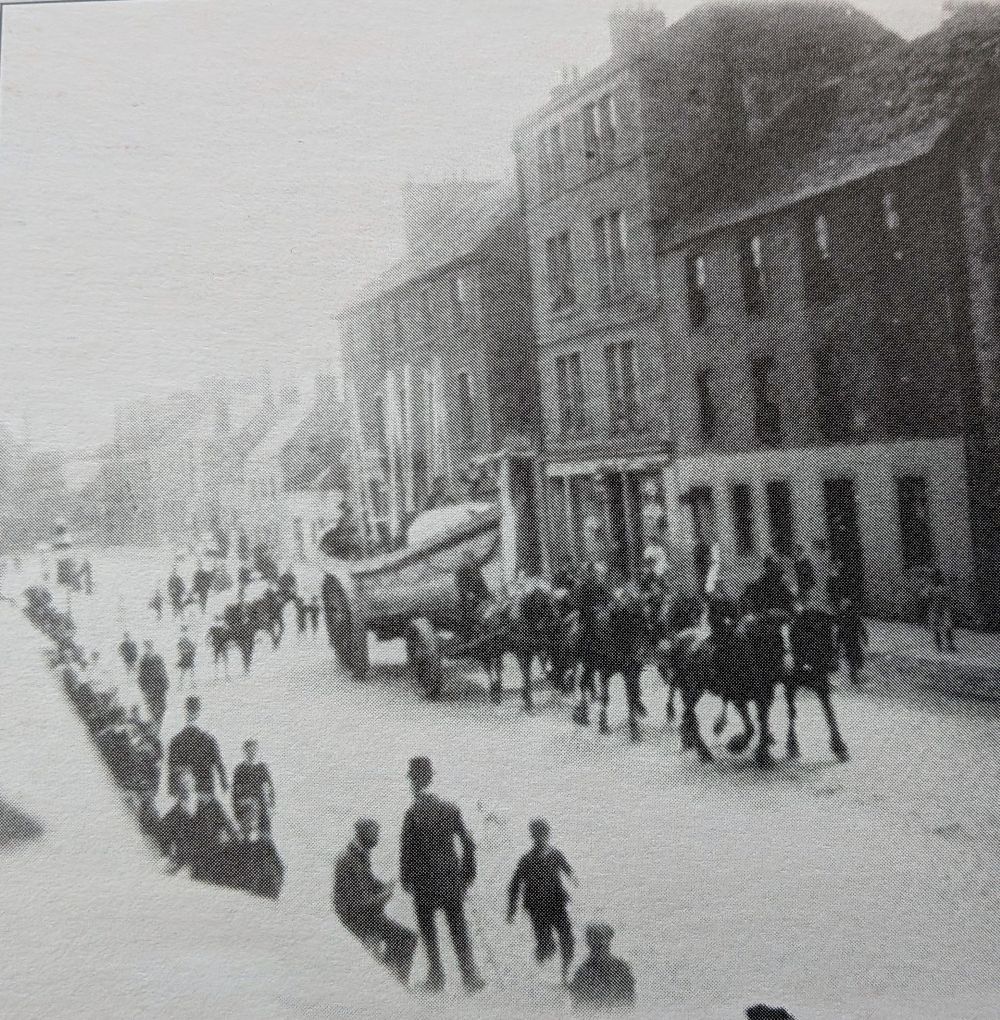
The photo above shows the first Dunbar lifeboat The Wallace, which arrived at the harbour in 1865, being taken along Dunbar High Street by a team of horses in 1892. The book tells us that when The Wallace arrived, a public holiday was declared and Headed by the Arillery Band and the local Volunteers, the lifeboat, with her crew aboard dressed in yellow sou’esters and oil skins, cork lifejackets and oars held vertical, was drawn through the streets. The lifeboat was called out numerous times during its 28 year term of service and, in one perilous mission, The Wallace went to the rescue of a Prussian sailing ship Patrios, which was in danger of being pulled on to the rocks at Whitberryness, which lies 8 miles to the west of Dunbar. Now known as Whitberry Point, it lies near Tyninghame beach.
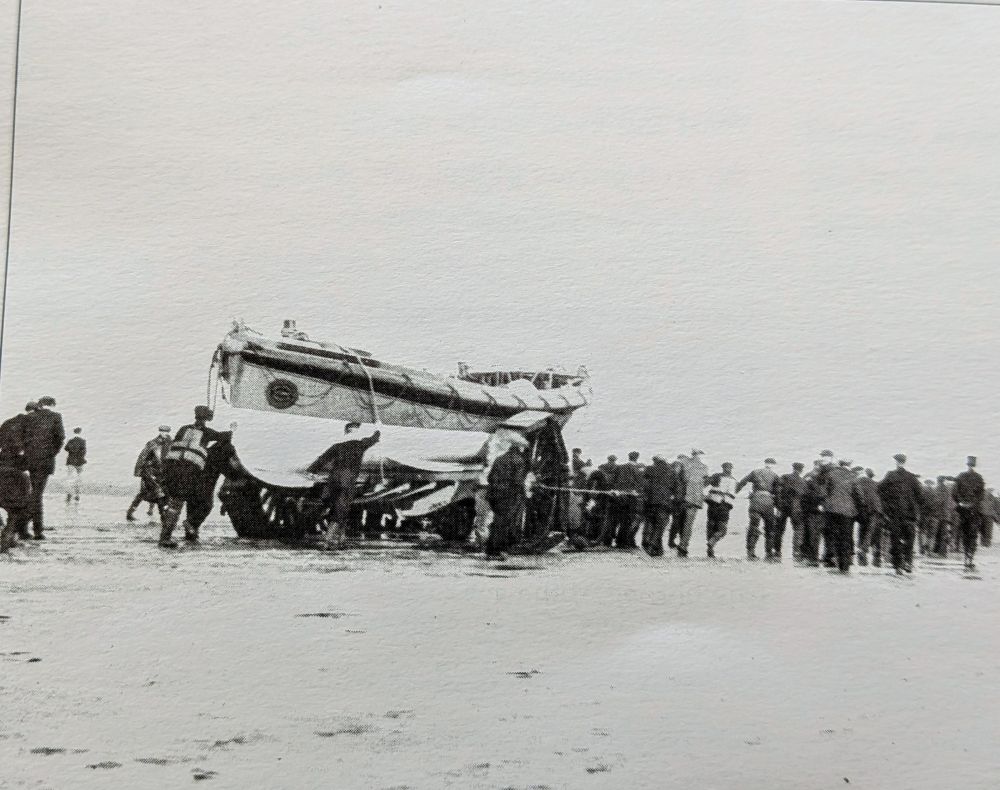
The photo above shows the Sarah Kay being launched at Skateraw. The Dunbar coxswain Walter Fairbairn – a name still welll known in Dunbar – was given charge of the Dunbar lifeboat as well as this new boat which was based at Skateraw. The book tells us that One of the first services to be carried outfrom Skateraw was the tragic affair of the Alfred Erlandsen which led to the establishment of the St Abbs Lifeboat Station. The Danish ship had been blown, on a very stormy night, on to the Ebbcarr Rock at St Abbs Head. Coxswain Fairbairn, a man given to dramatic description, gave a stirring account of what turned out to be a failed rescue. He noted that A telegram arrived sayimg “For God’s sake, send help. Crew drowning. Despite the lifeboat being filled with water Nine times within a distance of a thousand yards, the lifeboat carried on in high seas but it covered twice the distance to the sricken ship and this delay proved fatal for the crew of the Danish vessel. All the crew were drowned when the ship hit the rocks and all the lifeboat men could see was floating debris. Despite this disaster, the Sarah Kay went on to rescue many seamen in distress until 1943.
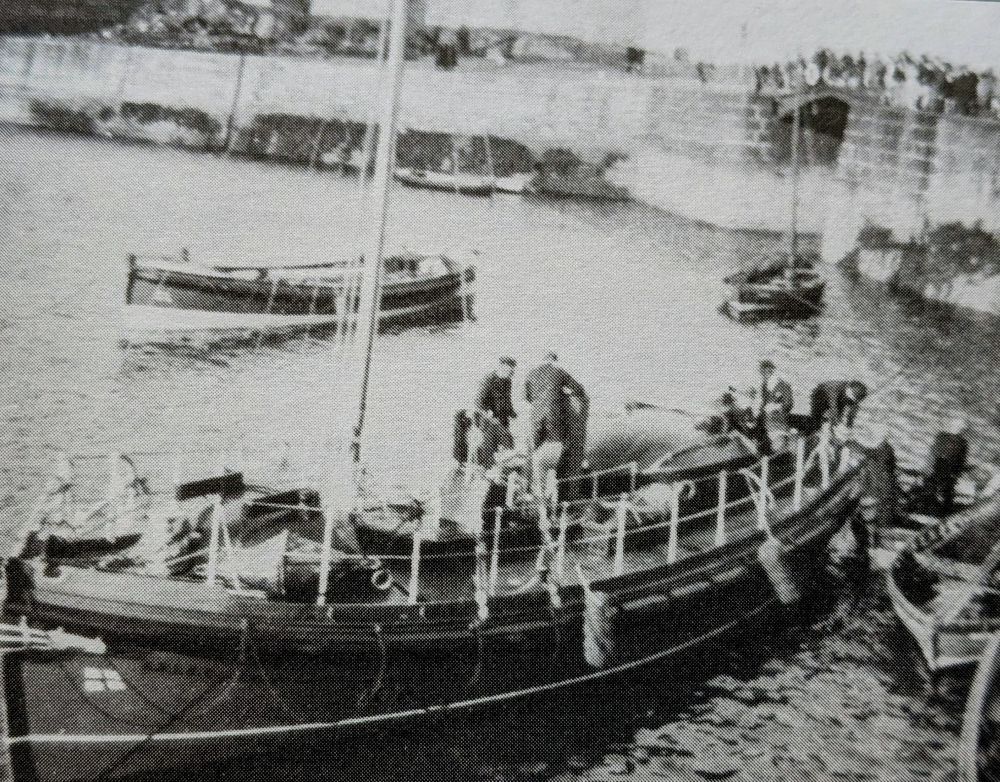
The photo above shows the George and Sarah Strachan, Dunbar’s first motorised lifeboat, in its mooring in Dunbar Harbour. The new motor lifeboat was much more powerful than the previous lifeboats with oars or sails and this meant it could stay out for extended periods, often in heavy seas. In its early years, the George and Sarah Strachan, named after its donor, went to the aid of many vessels, such as the Danish ship Velocitas. In 1939, the RNLI was committed to rescues involving, ships, downed aircraft and crews of all nations, according to the book. This lifeboat went to take on board crew from a Norwegian steamer which had been hit by a German bomb and rescued 32 sailors from the Romanian ship Verbar Milea which was wrecked off the coast.
You must be logged in to post a comment.