February 2026
The penultimate talk in the DDHS 2025-2026 season was delivered by Dr James Herring and despite a wet, cold and windy evening, there was a very good turnout of members for the talk. Photos and text by Dr James Herring.
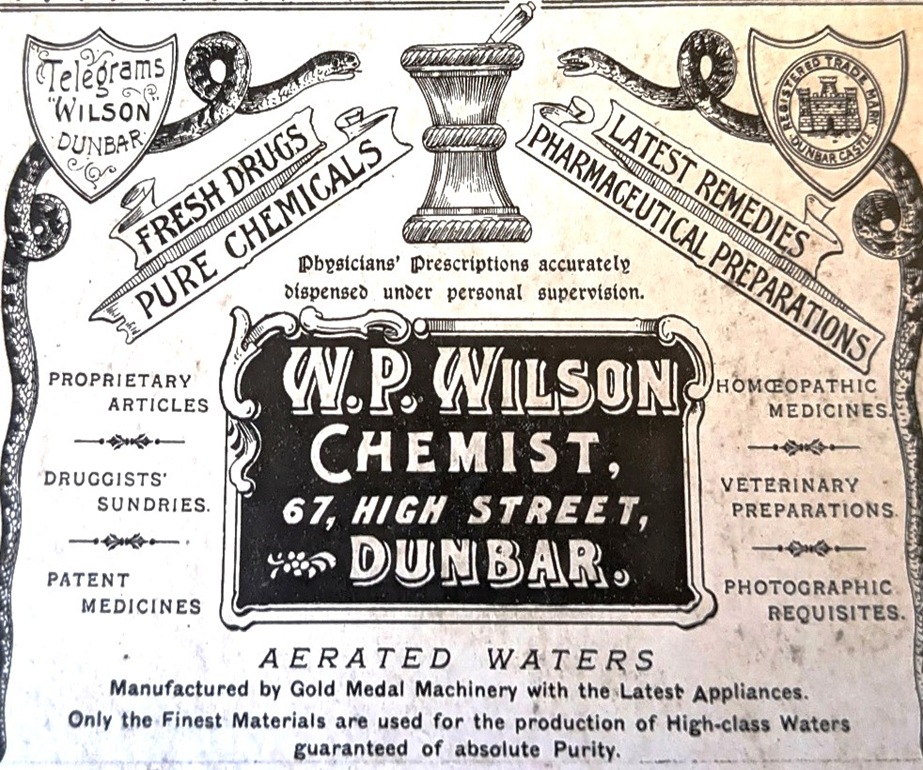
The above advert is from an 1890s brochure entitled Picturesque Dunbar which is also featured on this website here. There were a number of thse brochures produced between 1895 and 1905 but they are undated. One way of dating the brochures is by looking at the valuation rolls for the period. Wilson the Chemist gave way to Aitken the Chemist in 1899, according to the rolls, so this brochure is definitely pre-1899. 67 High Street is where the chemist shop still stands. The wide ranging advert describes prescriptions as accurately dispensed. Some of the language here would not be used today e.g. druggists’ sundries or fresh drugs as they may have different connotations. Note that the advert refers to photographic requisites and chemist shops were places where films could be processed well into the 20th ceentury.
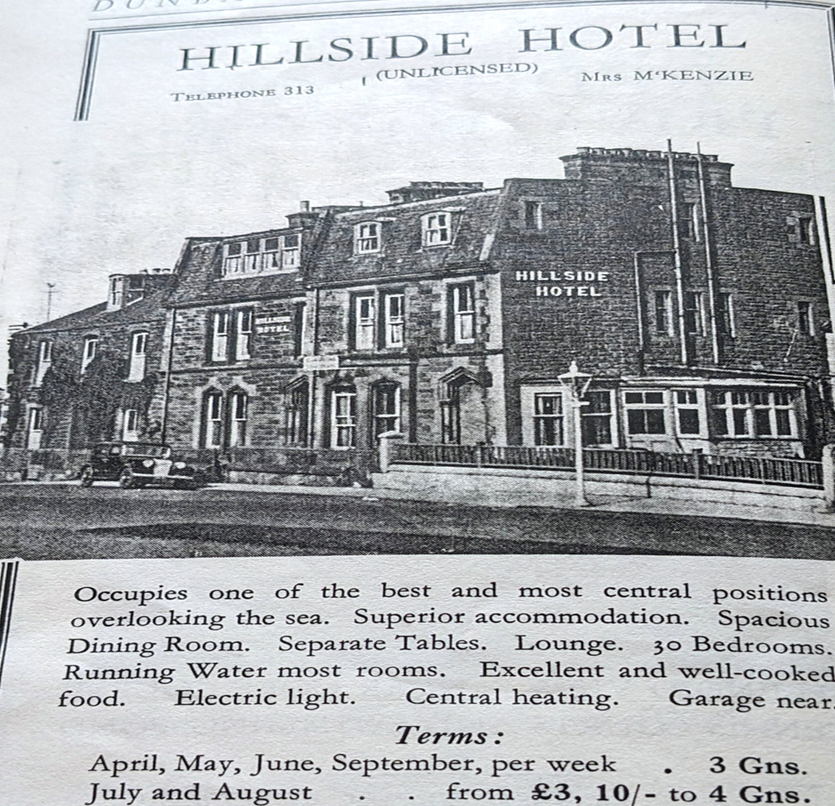
The advert above came from a 1937 brochure. The Hillside was a temperance hotel – see the unlicensed at the top of the advert – and other temperance hotels in Dunbar included the Albert Hotel and the Lorne Hotel. Across the UK, these hotels were regarded as a safe alternative to licenced hotels, some of which had a bad reputation e.g. for rowdiness or prostitution. They attracted families for holidays, travelling salesmen attracted by the lack of alchol but also the price, as temperance hotels were often cheaper. The Hillside hotel was also linked to the YMCA movement and you can read about the history of this movement, which is still active, here.
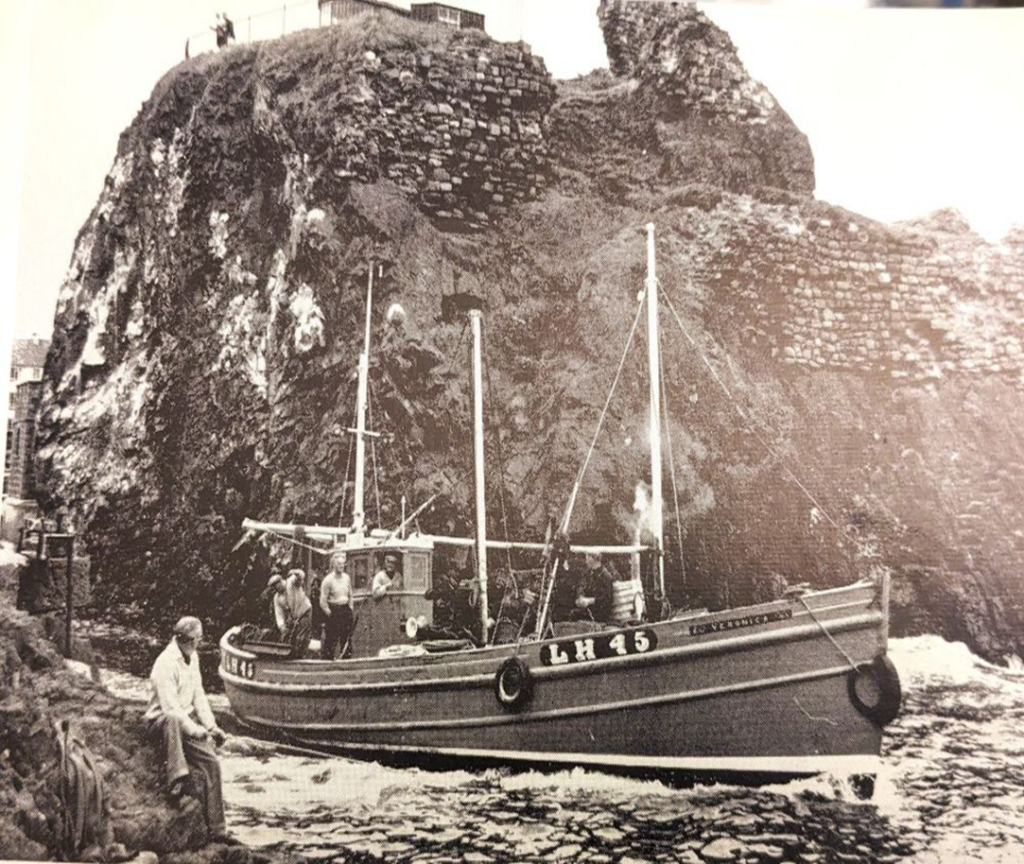
The speaker gave examples from brochures in the 1890s/1900s, in the 1930s and in the 1960s and 1970s, when Dunbar tourism was at its peak. All brochures featured Dunbar harbour and the castle .The photo above is from an early 1970s brochure and features the fishing boat Veronica leaving the harbour. This was a bit of a cheat by Dunbar publicity staff as the boat was from Port Seton but was a regular visitor to Dunbar. Despite this, the photo is interesting as it shows the castle walls with the remains of the kittiwake nests, but also people standing on top of the castle. At this time, before today’s (according to some) draconian health and safety laws, visitors could go up a steep path to the top and get wonderful views across the town and the sea.
Dr Herring argued that the brochures were a form of collective advertising where people had to chose a hotel and then contact it by letter or phone for information. He contrasted this with the individual advertising of today’s hotel websites e.g. https://www.dunmuirhotel.co.uk/ This part of the talk featured an interview with Philip Mellor, the present owner of the Dunmuir Hotel. This informative, educational and entertaining talk was given a warm round of applause by the appreciative audience.
You must be logged in to post a comment.